
Two players having a pair does not mean they have tied. Compare the pair ranks first, then the unmatched card if the pairs match. For two colours or two high-card hands, compare the cards from highest to lowest. Only after every relevant rank matches do you need the table’s tied-show rule.
First, give each hand its correct name
Lay out two hands: 8♣ 8♦ K♥ and A♠ J♦ 6♣. Looking only at the highest card suggests the ace should win. That skips the first decision. The first hand is a pair; the second is high card. Under the classic ranking, the pair wins before the king or ace needs a comparison.
Write the category beside each hand before sorting any individual ranks. If the categories differ, use the six-category hand ranking. If they match, continue within that category. This small pause prevents a surprisingly common mistake: applying a high-card tiebreaker to hands that were never equal in the first place.
The examples below use one ordinary 52-card deck without jokers. Each two-hand example uses six different physical cards. They are comparison exercises, not predictions about the next deal or instructions to increase a stake.
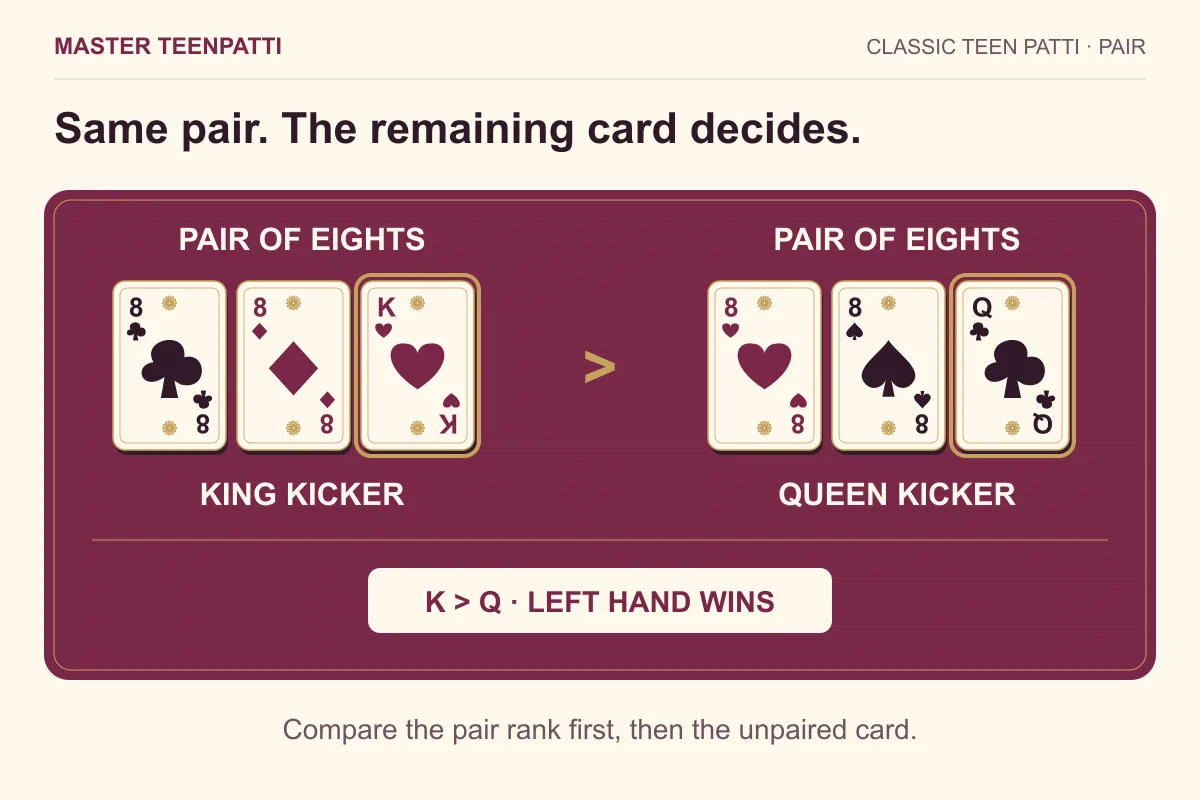
Same pair: the third card finally matters
Compare 8♣ 8♦ K♥ with 8♥ 8♠ Q♣. Both have two eights, so the pair comparison is equal. The remaining king outranks the remaining queen; the first hand is stronger. That unmatched card is often called the kicker. It matters here because the pair ranks already matched.
Now replace the second hand with 9♥ 9♠ 2♣. The pair of nines beats the pair of eights despite its very small extra card. Do not compare K with 2 first. A useful note beside this example is “pair, then kicker”—the order is part of the answer.
For practice, cover the third card in each hand and identify the pair. Reveal the third cards only when you need them. This makes the stopping point visible: unequal pairs finish the comparison immediately, while equal pairs require one further step.
Swipe sideways to see all columns →
| Hand A | Hand B | Decision |
|---|---|---|
| 8♣ 8♦ K♥ | 8♥ 8♠ Q♣ | A: equal eights; K beats Q |
| 8♣ 8♦ K♥ | 9♥ 9♠ 2♣ | B: nines beat eights; ignore kickers |
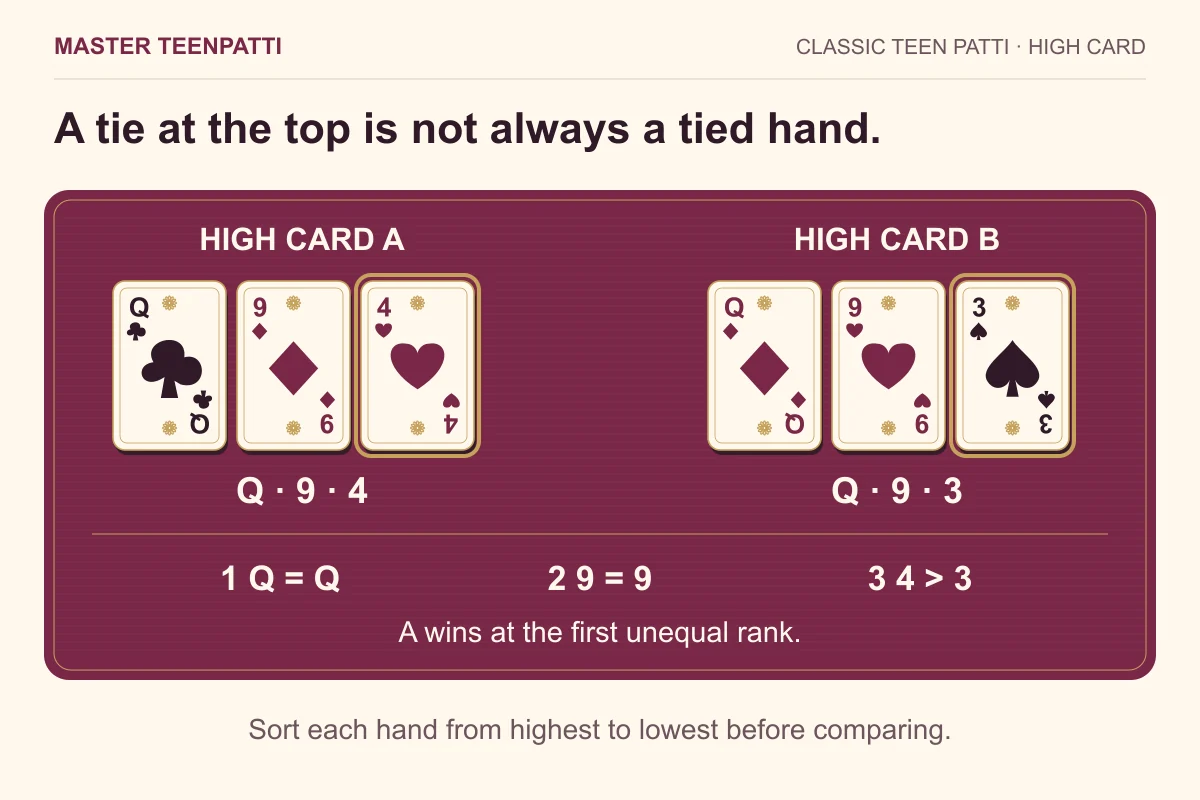
| Q♣ 9♦ 4♥ | Q♦ 9♥ 3♠ | A: Q and 9 match; 4 beats 3 |
| A♥ J♥ 6♥ | A♣ 10♣ 9♣ | A: two colours; J beats 10 |
| 7♣ 7♦ K♥ | 7♥ 7♠ K♣ | Equal rank: use the table’s settlement rule |
High card and colour: stop at the first difference
Take Q♣ 9♦ 4♥ against Q♦ 9♥ 3♠. Both are high card. Arrange each hand from highest to lowest: Q–9–4 and Q–9–3. The queens match. The nines match. Four beats three, so Hand A is stronger. The third card can decide a hand even when neither player has a pair.
For two colours, use the same descending comparison after confirming that both hands really are colours. A♥ J♥ 6♥ beats A♣ 10♣ 9♣: the aces match, then jack beats ten. The nine in the second hand never gets a vote. Adding all three ranks would answer a different question and can produce the wrong winner.
Check for a sequence before applying this method. Three consecutive cards in one suit are a pure sequence, not an ordinary colour. The sequence and colour guide explains that classification step with separate examples.
Equal sequences and the ace-order exception
Consider 5♣ 6♦ 7♥ and 5♦ 6♠ 7♣. Both make the same ordinary sequence. Moving a seven from hearts to clubs does not improve its rank under the rules used here. Likewise, 5♥ 6♥ 7♥ and 5♣ 6♣ 7♣ are equal pure sequences when suits have no ranking.
The harder case is comparing A–2–3 with A–K–Q. Published rule sets differ: Octro’s learning page puts A–K–Q first; Pagat documents a traditional order with A–2–3 first. Agree that setting before the deal. A screenshot of the cards alone cannot resolve a disagreement about which rule the table uses.
For a written exercise, put the ace order at the top of the page. For an app, consult its own table information. Do not silently transfer one publisher’s ordering to another app or to a special variant.
Equal strength is a result; settlement is another rule
7♣ 7♦ K♥ and 7♥ 7♠ K♣ have equal pair ranks and equal kickers. There is nothing left to compare. Giving the pot to a spade or drawing a fourth card would introduce a new rule. Record “equal rank” first, then look up how this particular comparison is settled.
Pagat’s requested two-player show awards an equal-hand result to the player who did not request it. TeenPatti Royale’s published showdown rule also says the requester loses an exact tie. These are documented examples, not confirmation of the behaviour of the APK linked from this website.
A sideshow is a separate action and need not end the round. The show and sideshow guide explains the eligibility distinction. Record whether the reveal was requested or automatic, who requested it and how many players remained. Those facts can matter even after the hand ranks are settled.
A five-minute check you can repeat without stakes
Use the five rows in the table as a worksheet. Hide the decision column and say your reason out loud before checking it. “A wins” earns less useful feedback than “the pairs match, then king beats queen.” When an answer is wrong, underline the first comparison you made in the wrong order.
Change one card and ask whether the category changes before repeating the comparison. Then swap the players’ positions without changing their cards. Hand strength should stay the same; a requested-show settlement might change if you also change the requester. Keep these two exercises on separate lines.
For more examples, use the hand comparison practice and the offline practice routine. Neither exercise predicts wins. Its purpose is to make a rule you can explain, check and correct.
Questions readers ask
Does a spade beat a heart in a tie?
Not in the no-suit-ranking model used in these examples. Suits identify combinations, but a higher-looking suit symbol does not settle equal ranks. Check whether the table explicitly publishes a different convention.
Can two players both have three kings?
Not from one ordinary 52-card deck: two separate trails of kings would need six kings, but the deck has four. Multiple decks or wild cards would change that model.
Should equal hands always split the pot?
No. A requested show can have a requester-loses rule. Establish the table’s settlement rule rather than assuming a split from equal card ranks alone.
Sources & scope
Original worked examples for classic, no-joker hand comparisons. Sources document ranking and specific show conventions; they do not verify this APK’s table settings. No app session or real-money outcome is claimed.
APK file details · Editorial policy
About the author

Teen Patti Rules & Hand Rankings Editor
Classic Teen Patti rules, hand categories, sequence order, tie-breakers, table actions and worked three-card comparisons.
Author profile and guides · Public editorial profile at Play TP Master
For sources, revisions and corrections, see our editorial policy. To flag an error, email [email protected] with this page’s URL, the passage and a supporting source.