
Editorial collection
Teen Patti Guide Desk
Card examples, hand rankings and the words you meet at a Teen Patti table.
What this collection covers
This collection explains trail, sequence, colour, blind, seen, chaal and pack. Examples separate the rank of a card from its suit, and ordinary rules from variant-specific rules.
How to use these guides
General rules are checked against the cited game publisher’s learning material. Examples illustrate those rules; they do not establish the modes, limits or controls in the linked APK.
Choose the question, then the example
For a ranking problem, begin with sequence versus colour. For an action or a chip amount, begin with blind versus seen. For a comparison request, use show versus sideshow. The glossary stays short so it can serve as a reference while you read the longer walkthroughs.
Read the scope with the rule
The diagrams are original teaching examples, not screenshots from the linked app. Published rules are identified by their source; a developer’s rules describe that developer’s game. Where a mode can differ—ace order, ties, stakes or eligibility—the guide tells you what to check before applying the example.
Published guides
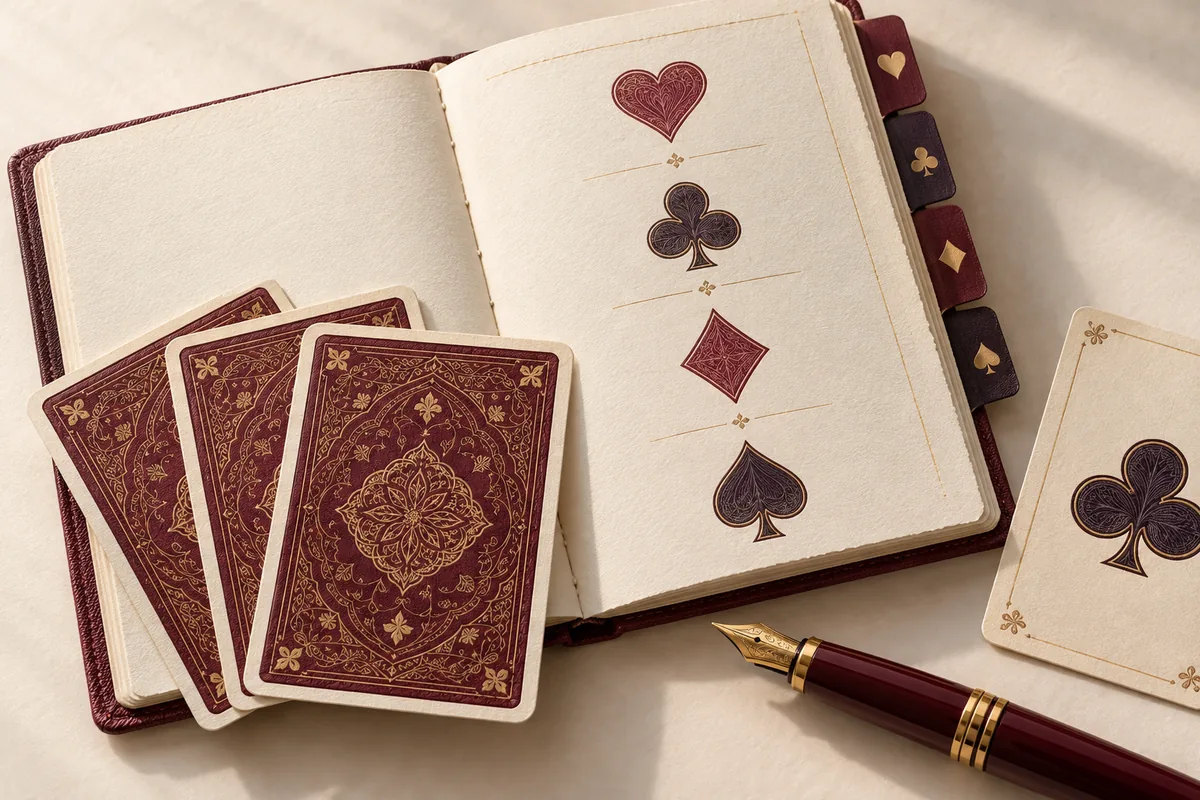
Teen Patti Terms: Boot, Chaal, Pack, Show & Sideshow
Understand Teen Patti table terms with a quick glossary and a worked hand: boot, pot, chaal, blind, seen, pack, show and sideshow.
Read guide →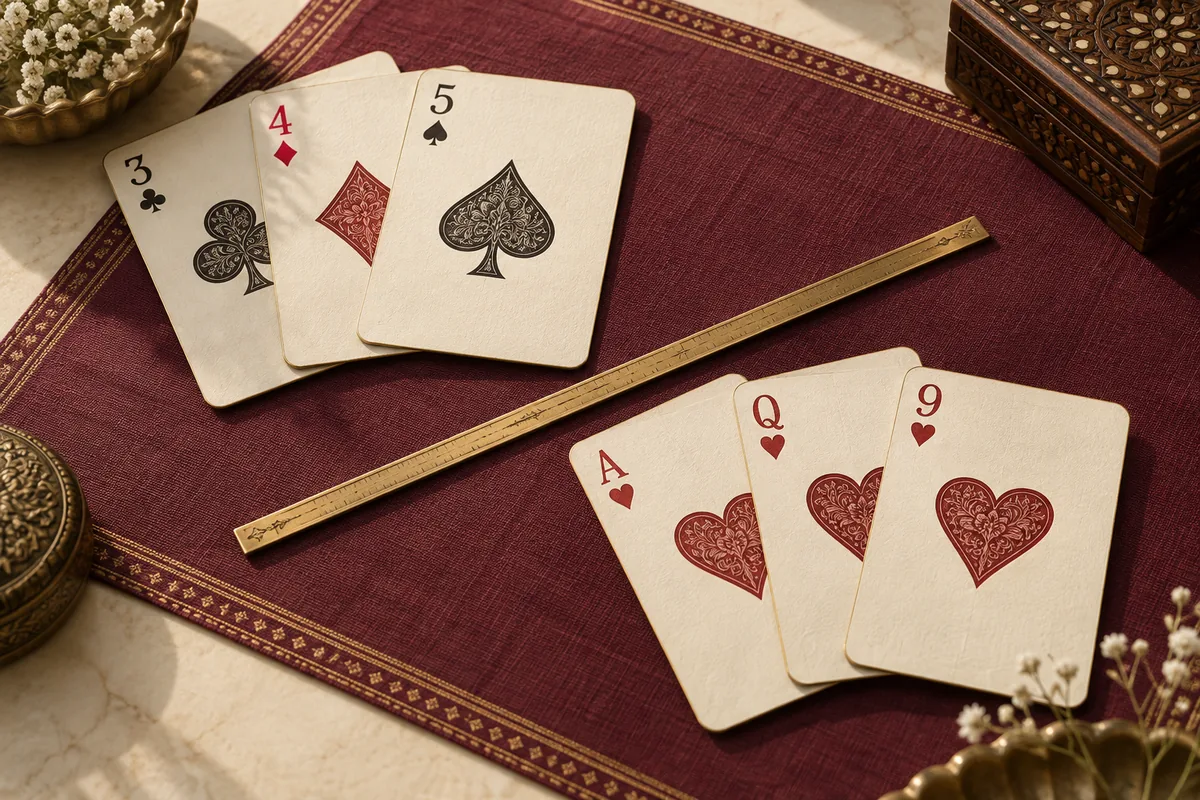
Teen Patti Sequence vs Colour: Which Is Higher?
A sequence beats a colour in standard Teen Patti. Compare the hands with card examples, same-category tie-breaks and common suit mistakes.
Read guide →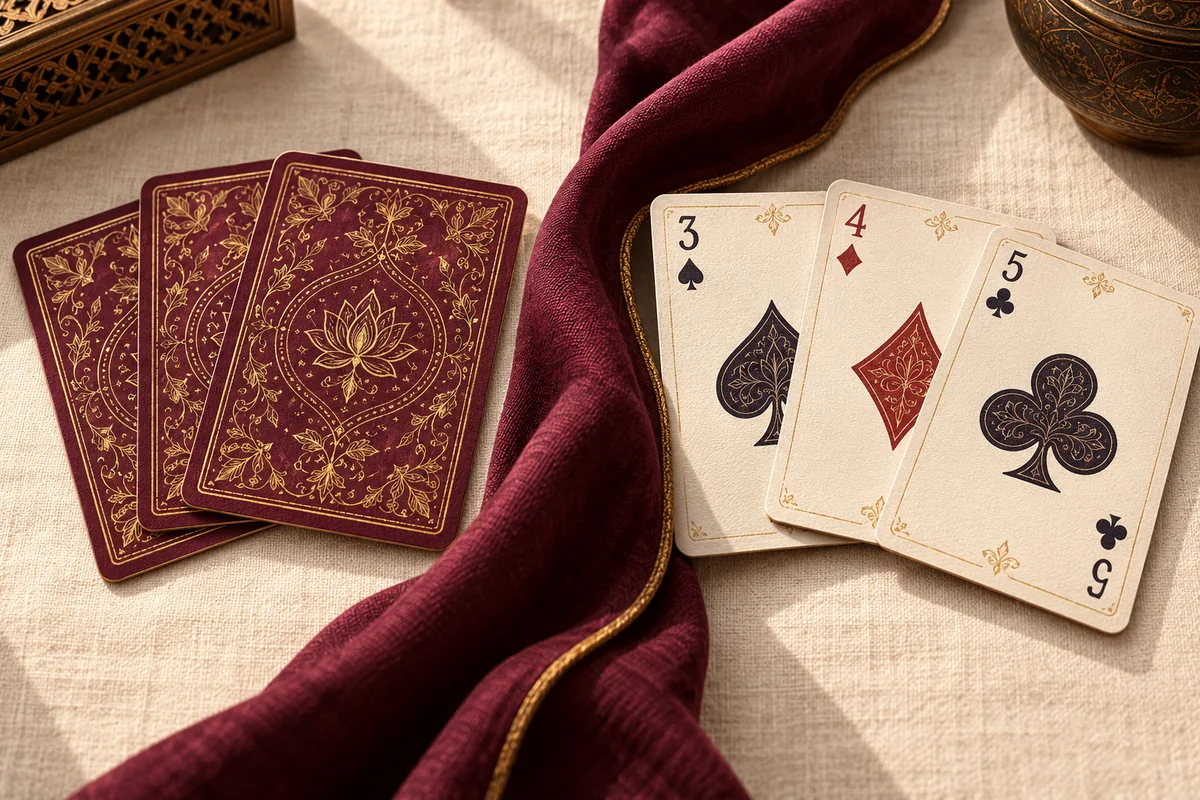
Blind vs Seen in Teen Patti: Meaning & Chaal Rules
Blind means you have not looked at your cards; seen means you have. Follow a chip example to separate player status, chaal and the pot.
Read guide →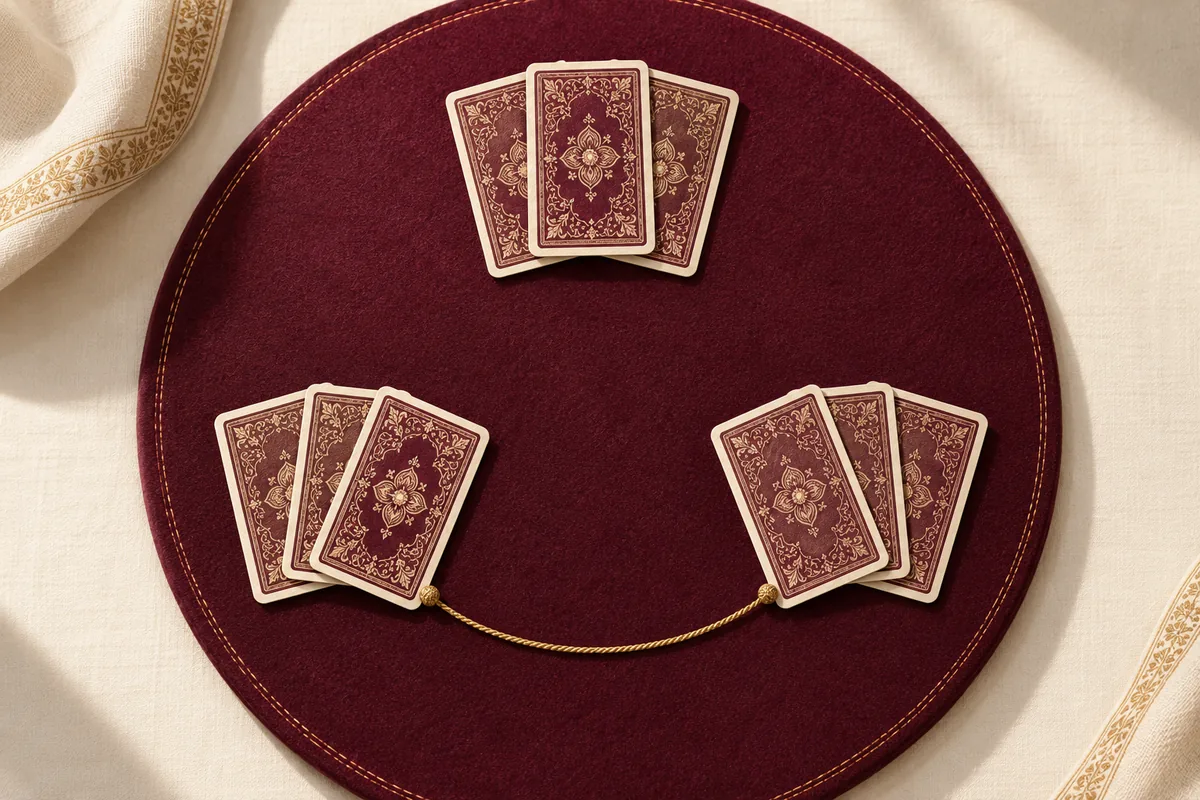
Teen Patti Show vs Sideshow: Who Compares & What Happens
Show settles a final comparison; a sideshow can leave other players in the hand. Learn requests, refusals and ties with an A/B/C example.
Read guide →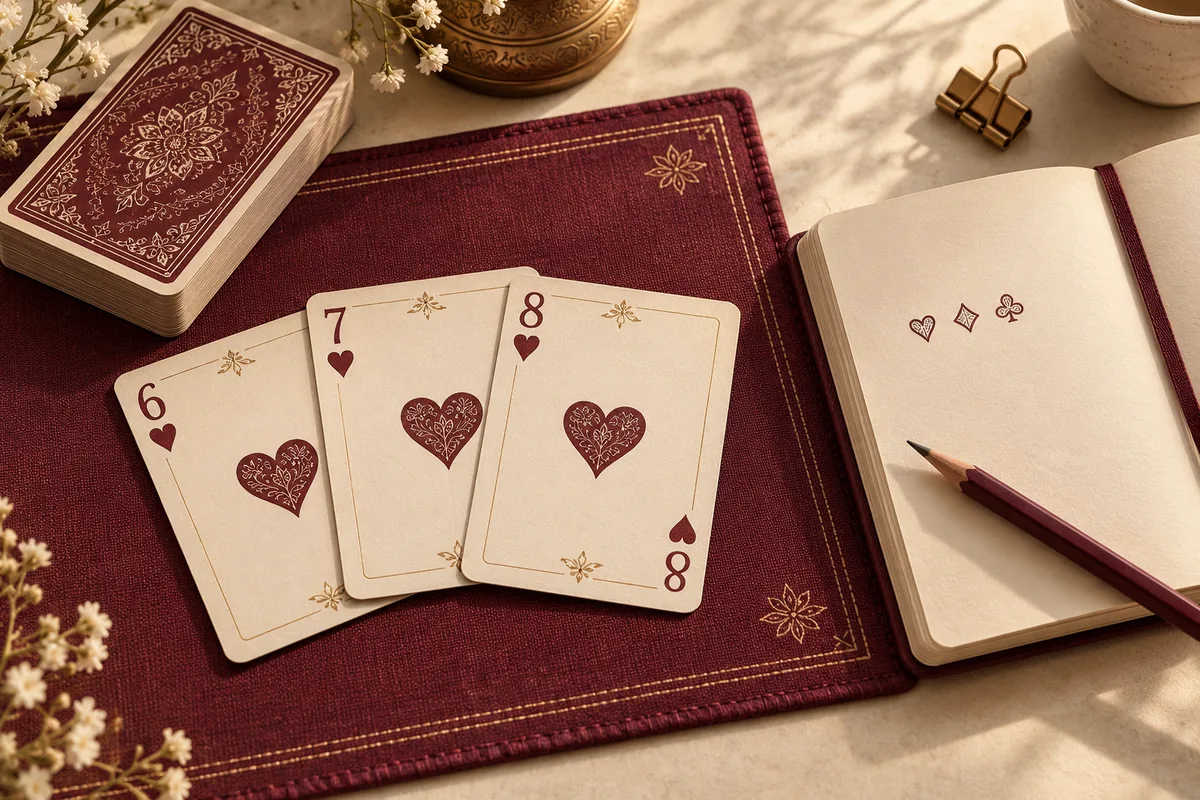
How to Practise Teen Patti Offline Without Money
Use a real deck for a 15-minute Teen Patti practice session. Compare three sample hands, rehearse player actions and record mistakes without cash or an app.
Read guide →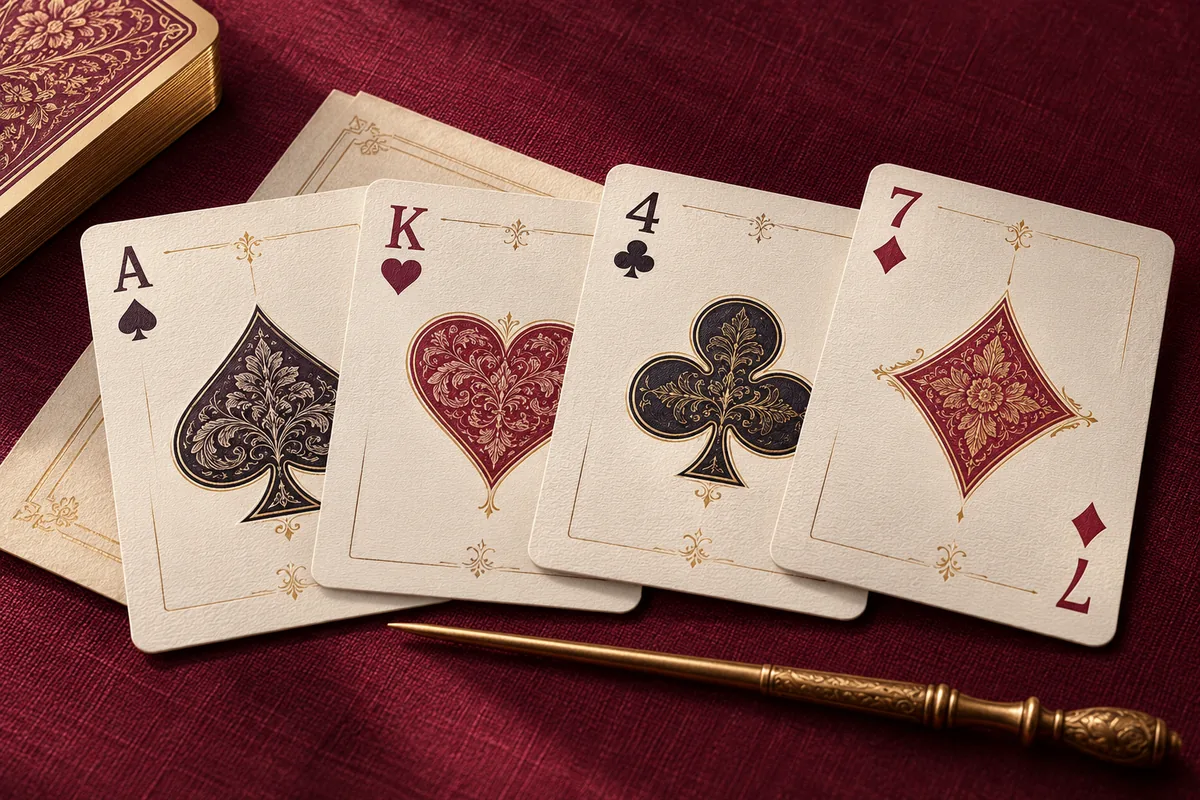
Teen Patti Joker & AK47 Rules: Card Examples
See how chosen-rank jokers and AK47 wild cards change a Teen Patti hand, with worked examples and the table rules to check before comparing cards.
Read guide →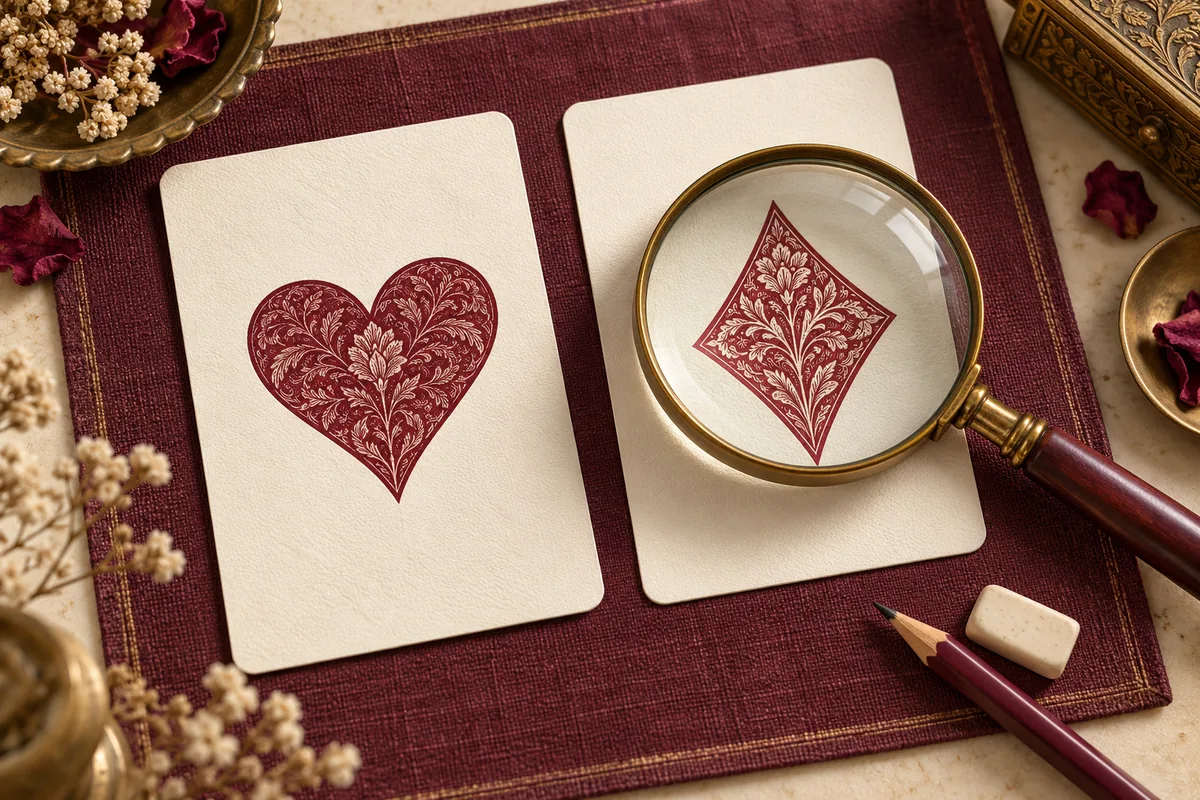
7 Teen Patti Beginner Mistakes, With Examples
Avoid seven common Teen Patti rule mistakes: category before card rank, suit versus colour, blind versus seen, stake versus pot, and show eligibility.
Read guide →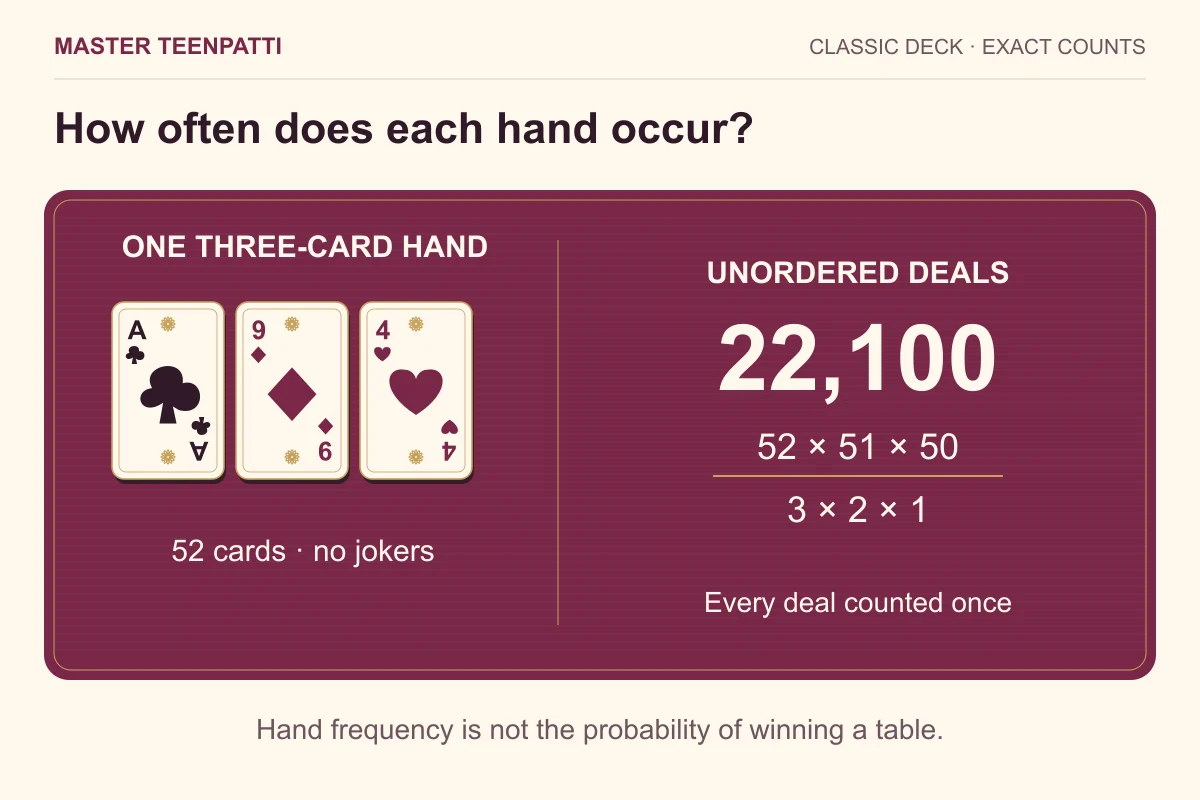
Teen Patti Hand Probability: All 22,100 Hands Counted
See how often each classic Teen Patti hand occurs, with exact counts, worked calculations and the difference between hand frequency and winning a round.
Read guide →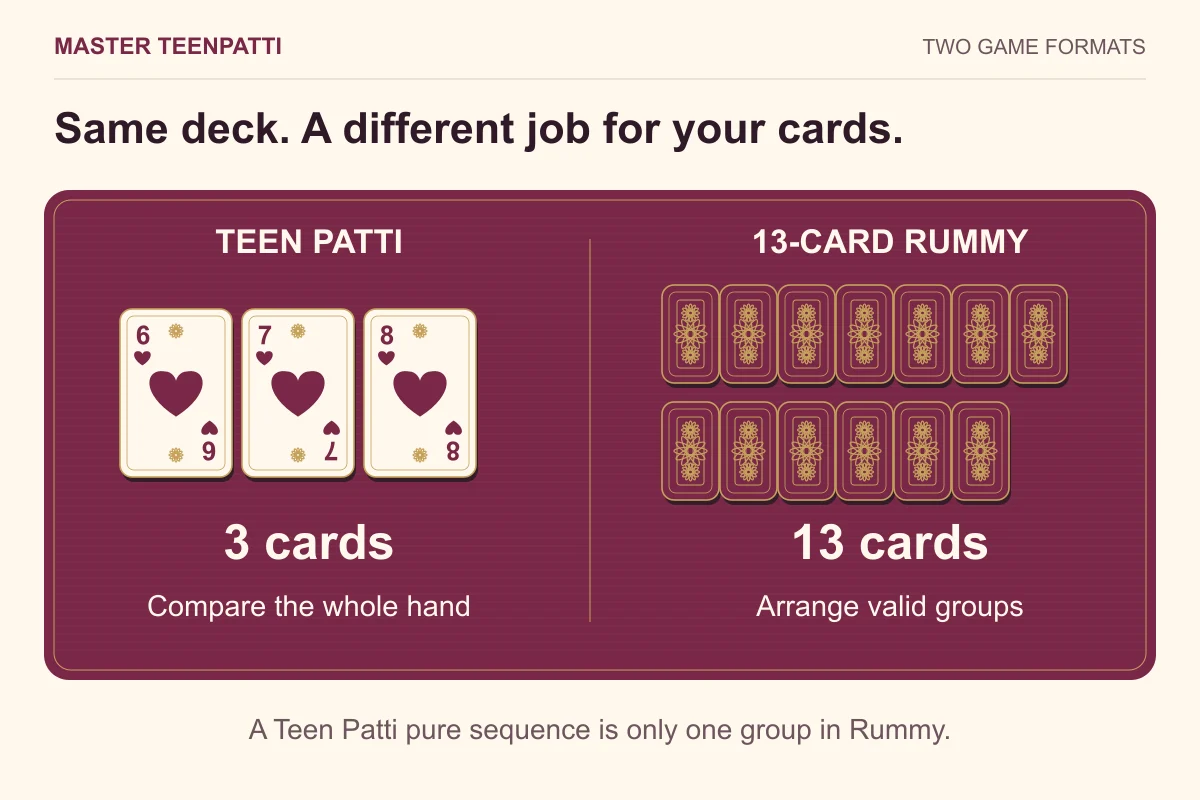
Teen Patti vs 13-Card Rummy: Same Cards, Different Goals
Compare Teen Patti and Indian Rummy through one shared card example, a full 13-card grouping and the rules that do not transfer between the games.
Read guide →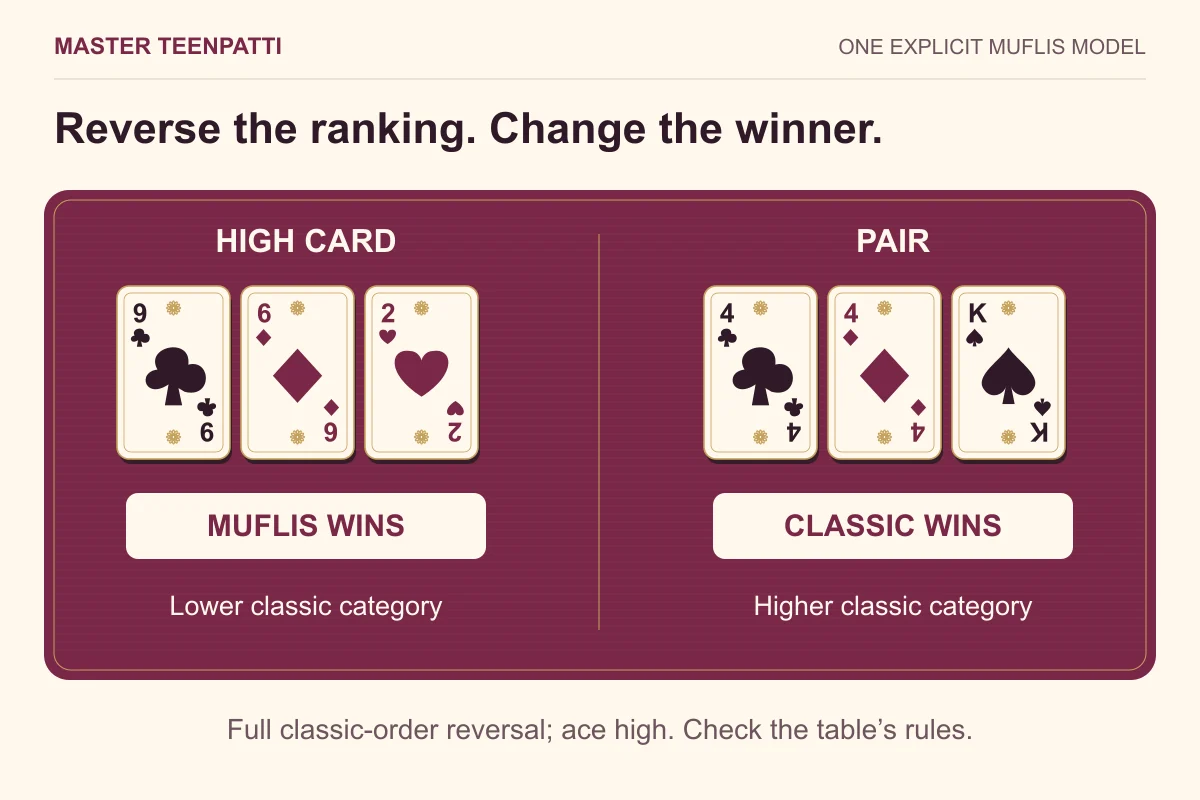
Muflis Teen Patti Rules: Reverse the Ranking, Check the Hand
Learn reversed-ranking Muflis with original card comparisons, a step-by-step low-hand check and clear explanations of pairs, sequences and ace rules.
Read guide →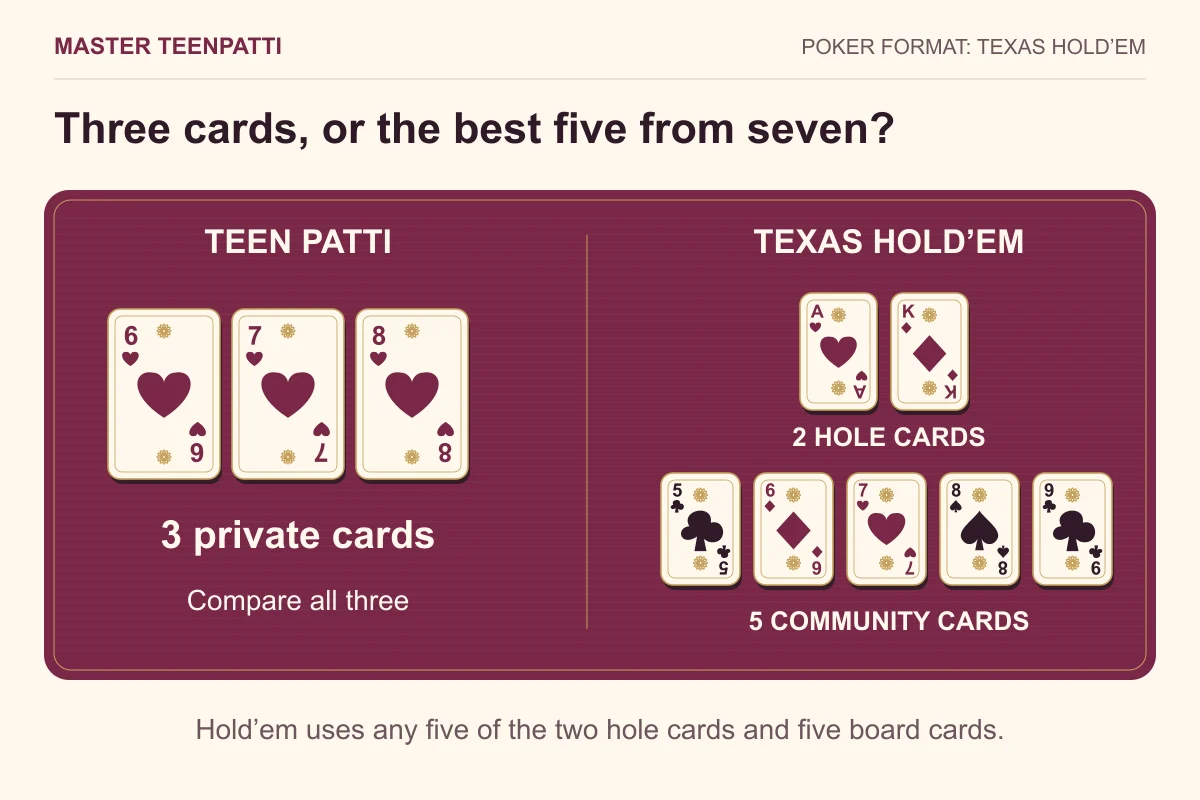
Teen Patti vs Poker: A Texas Hold’em Comparison With Cards
Compare Teen Patti with Texas Hold’em through card counts, shared-board examples, ranking differences and the two meanings of blind. Includes an illustrated tie.
Read guide →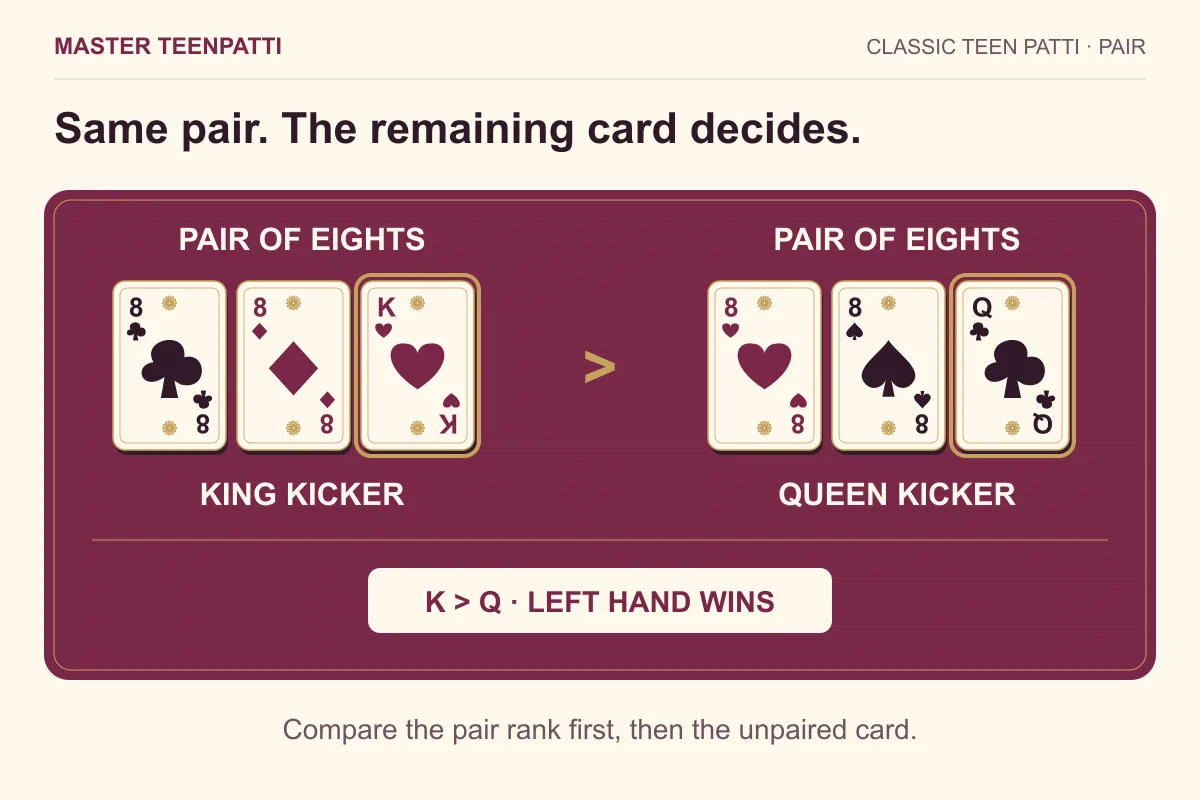
Teen Patti Tie Breakers: Same Pair, Colour and High Card
Compare equal-looking Teen Patti hands with worked card examples. Learn when a kicker matters, why suits do not settle a tie, and which show rule to check.
Read guide →Category, status and action are separate
Sequence versus colour identifies the cards. Blind versus seen identifies whether a player looked. Show versus sideshow explains which hands are compared.
To report a disputed example, include every card’s rank and suit, the variant and the rule applied. “It was a strong hand” does not let another reader reproduce the comparison.